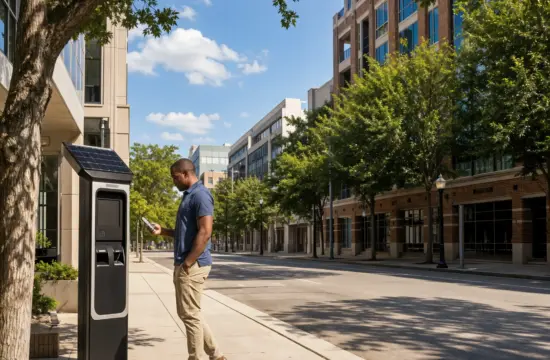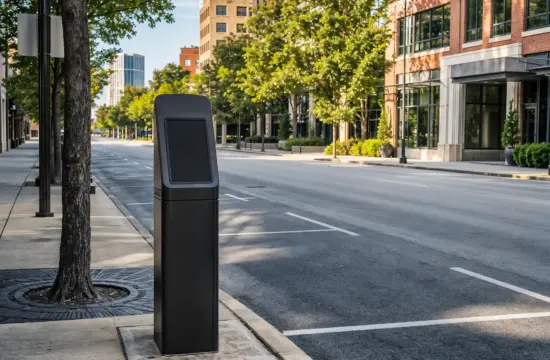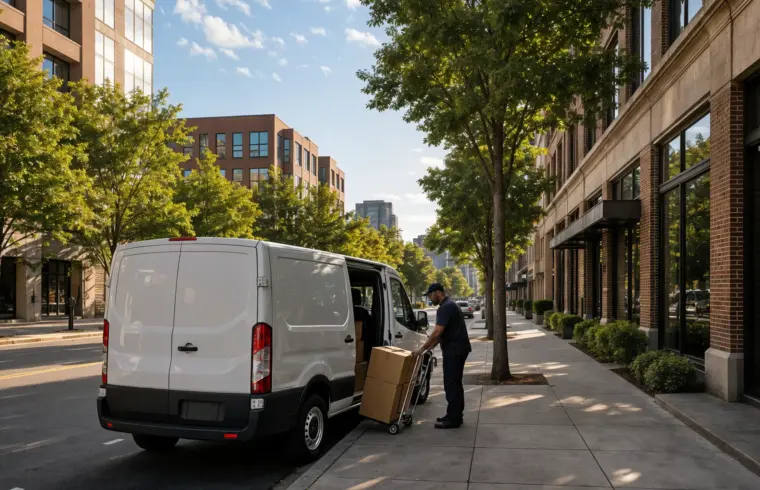
Delivering or picking up in the City of Atlanta comes with one rule most drivers learn only after a ticket: a truck or other commercial vehicle may stop in a freight curb loading zone only while it is actually loading or unloading.
Parking there “just for a minute” to run inside, waiting on a call, or leaving a vehicle at a loading zone overnight is exactly what the rule prohibits.
The city’s answer is a permit.
The Atlanta Department of Transportation (ATLDOT) manages access to commercial loading and unloading zones and requires commercial vehicles using these zones to carry a Commercial Vehicle Parking Permit. The permit costs $300 a year and comes with a specific set of application and display rules.
This guide explains the freight-zone rule, what the permit does and does not let you do, and how to apply. The facts come from ATLDOT’s own parking-services page and the Commercial Vehicle Parking Permit application, both checked in November 2026. ATLDOT’s live pages are the authority over anything stated here.
Who sets the rules
Commercial loading and unloading in Atlanta is the responsibility of ATLDOT, not a private operator. The department’s Parking Services page lists “commercial loading and unloading” among the things its team oversees, alongside the metered on-street system, residential permits, and valet permits.
The Department of Transportation manages access to commercial loading and unloading zones and allows applicants to obtain permits for loading-zone access and exemptions from metered on-street parking. In other words, loading zones are a municipal program with a permit, not a free-for-all.
Who this affects
The freight loading zone rules matter to anyone who operates a commercial vehicle in the city: package and food delivery drivers, couriers, moving crews, contractors and tradespeople hauling tools and materials, and the small businesses that run one or two trucks.
If you stop at a curb to carry goods in or out rather than just parking, you are using the loading system this permit covers.
A private passenger car running a quick errand is not part of this program. Passenger metered parking and residential permits are separate systems, covered elsewhere on this site. This guide is for the commercial-vehicle case, where the curb is a work zone rather than a parking spot.
The freight curb loading zone rule
The core restriction is in City Code section 150-114(a), which the permit application quotes. A truck or a vehicle properly licensed as commercial may stop, stand, or park in a place marked as a freight curb loading zone only for the expeditious unloading and delivery, or pickup and loading, of materials — and only during the hours the zone is in effect.
Any other vehicle is barred from stopping there except for that same loading or unloading purpose.
The operative word is expeditious. The rule does not create commercial parking; it creates a window to load or unload and then move. Leave a vehicle in the zone after the delivery is finished, and you are no longer covered by the permit or the code.
The practical line is easy to draw. Unloading a van full of packages, carrying a delivery into a building, and loading a truck for a job site are exactly what the zone is for. Stopping to wait for a dispatch, eating lunch, or leaving the vehicle while you run an unrelated errand is not loading or unloading, and the zone’s posted hours do not extend that protection.
The code ties the whole thing to the hours the zone is “in effect,” which means the curb sign sets the window. Read the posted hours before you rely on a space: a block that operates as a freight zone only during business hours is a different proposition the rest of the day.
The Commercial Vehicle Parking Permit
The permit that governs this is the Commercial Vehicle Parking Permit, issued by ATLDOT. The application form states the fee plainly: $300.00 per year.
That $300 covers one vehicle. The application requires the vehicle’s make, model year, body style, and tag number. ATLDOT issues the permit for that specific vehicle, and drivers must display it only on the vehicle listed in the application. It attaches to the inside lower corner of the driver’s-side window, where an enforcement officer can see it.
The window placement matters because enforcement reads the permit at the vehicle, not at a gate or booth. A permit tucked in a glovebox or left in another vehicle does not identify the commercial vehicle it belongs to, which is the whole point of the display rule. The fee is stated per year, so budget it as an annual cost rather than a one-time expense.
What the permit buys is access to freight curb loading zones for actual loading and unloading, along with the metered on-street exemption ATLDOT describes on its Parking Services page.
The permit does not reserve a parking space or allow drivers to park in prohibited areas, as the application terms clearly state. stated in the application terms.
How to apply
Applying means completing the Commercial Vehicle Parking Permit application and submitting two documents with it: a copy of the driver’s licence for the person who drives the permitted vehicle, and a copy of the vehicle’s current registration.
The application can be mailed or delivered in person to ATLDOT at Atlanta City Hall, 55 Trinity Avenue SW.
The city’s Apply4 permit portal allows applicants to start a Commercial Vehicle Parking Permit application online. The Parking Services page lists Kimberly Wood as the contact for commercial loading and unloading permits and provides the Parking Program Office phone number: 404.330.6501.
Because the fee and the document list are municipal and can change, treat the application form itself as the current authority when you apply rather than relying on memory.
What the permit does not cover
The Commercial Vehicle Parking Permit is one of several ATLDOT commercial permits, and it is easy to reach for the wrong one. It covers a commercial vehicle using freight loading zones — not a business operating a parking service on city streets.
Businesses need a Valet Parking Permit to operate valet services. The permit remains valid for one year, and businesses must renew it annually.Any parking facility that charges for parking needs a Park-for-Hire permit.
And a lot used temporarily for a special event — ATLDOT names East Lake, Lakewood Amphitheatre, Mercedes-Benz Stadium, and Turner Field — needs a Temp-for-Hire permit. Each is a separate application, so match the permit to what you are actually doing.
How this fits with the rest of Atlanta parking
The commercial loading rules sit next to two other city programs that are easy to confuse. The residential permit program is for residents parking on restricted residential streets, not for deliveries.
The metered on-street system governs the spaces a commercial permit gives you an exemption from.
For the wider picture of how parking is administered across the city, see the City of Atlanta parking hub. And if you do end up with a citation, the ticket appeal process is separate from the permit and has its own deadlines.
What to check before you rely on this
Everything here reflects ATLDOT’s published pages as of November 2026. The $300 fee, the document requirements, and the loading-zone hours are municipal facts that can change.
Re-check the Parking Services page and the application form before you apply or before you park a commercial vehicle in a loading zone.
The short version worth remembering: load or unload only, in the zone, during the hours it is in effect, with a valid permit on the window — and the $300 permit applies to one specific vehicle.